


Buried in an internal CMS planning document marked “not releasable to the public” is the Trump Administration’s dystopian plan to bring AI companies into Traditional Medicare to decide who does and doesn’t get care. The document, obtained by the Electronic Frontier Foundation through a lawsuit, lays out the expansion plans for the Wasteful and Inappropriate Service Reduction (WISeR) model that launched January 1. The model has already caused delays and inappropriate denials for patients in all six states it is being piloted in, and CMS’ own documents show that these denials are a feature and not a bug. If the Trump Administration gets its way, millions of Medicare beneficiaries will need a for-profit AI company’s sign-off before they can get cancer treatments, emergency air transport, or certain heart procedures like implanting pacemakers and cardiac catheterization, a procedure often used to treat active heart attacks.
The debate around WISeR hinges on prior authorization - the practice of requiring a provider to obtain permission from a patient’s insurer before treating them. Providers, patients, and policymakers are ringing the alarm that prior authorization is a major hurdle to patients, and is often used to juice corporate profits at the expense of the care. In February, a poll found that more than a third of insured adults viewed prior authorization as their biggest single burden to care. Both Democrats and Republicans have targeted the use of prior authorization in commercial health insurance plans and Medicare Advantage plans, the private insurance plans offered to Medicare beneficiaries - one of the few health care issues that transcends party lines.
But on June 23, 2025, the same day Trump officials and insurance executives jointly announced “voluntary pledges” to decrease prior authorization burdens in private insurance plans, CMS completed its internal Innovation Center Investment Plan (ICIP), which built a program that would both significantly expand prior authorization for traditional Medicare beneficiaries and take the decision power away from Medicare or Medicare Administrative Contractors (MACs), and instead give the responsibility to private AI companies who, according to these documents, are financially incentivized “to deny as many claims as possible.”
CMS Slaps Its Own A.I. Contractor in Controversial WISeR Program

Just six months into the pilot, CMS ordered one of WISeR's AI contractors to take corrective action as concerns mount over delays, denials, and the privatization of Traditional Medicare.
The WISeR model launched on January 1, 2026, just six months after it was announced. CMS’s own documents acknowledge the “extremely condensed timeline;” at least one vendor asked for a delay and was refused, writing in the weeks before the launch that their portal would not be operational by January. Despite concerns from patient advocates, privacy advocates, providers, and policymakers, CMS refused to release basic information about how the program would operate, including the contracts with the AI vendors and the exact payment amounts.
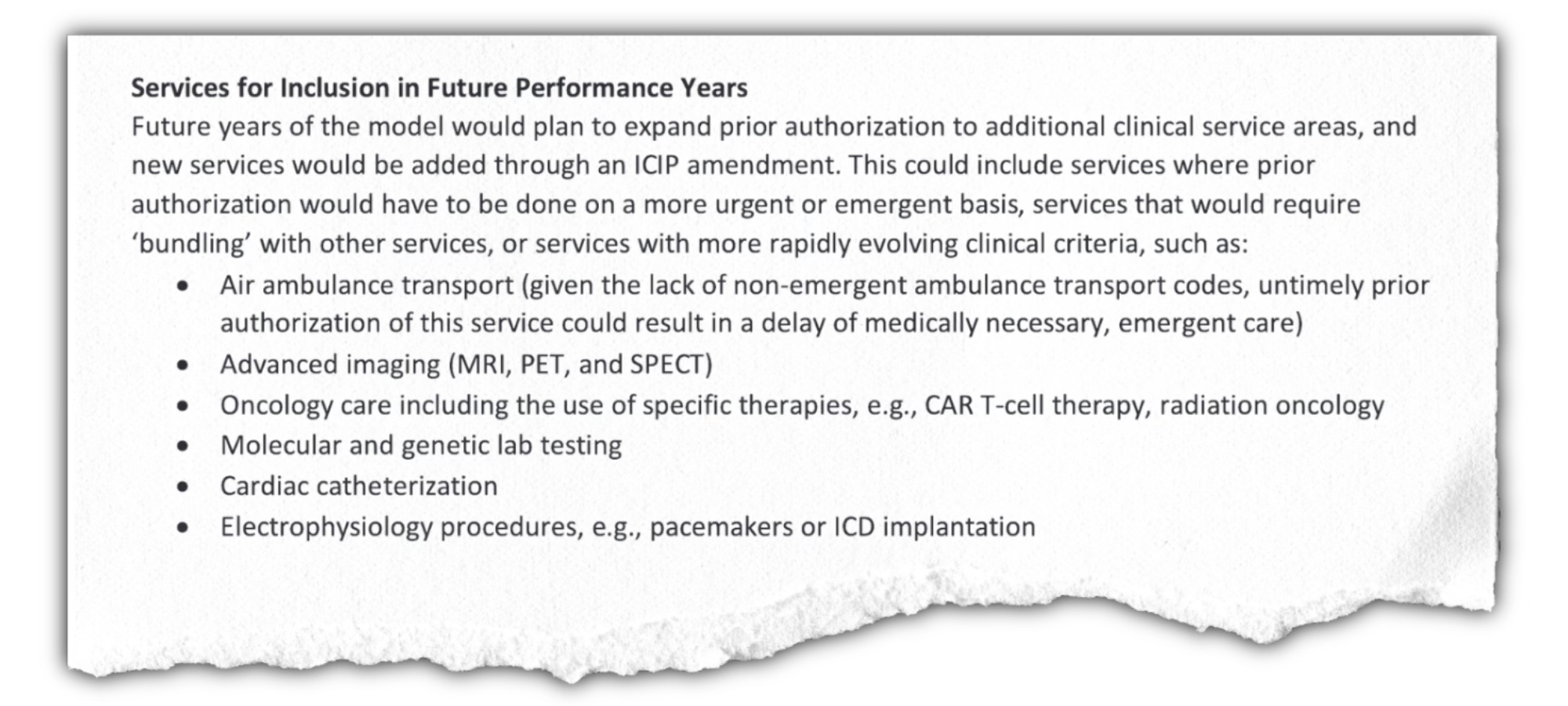
Now, the documents released by EFF finally lay out the structure and intent of the program, and it’s a worst-case scenario. Future service categories for planned inclusion in WISeR included oncology care, cardiac catheterization, and electrophysiology procedures like pacemakers or ICD implantation. The list also included “air ambulance transport,” - about which CMS acknowledged that “untimely prior authorization of this service could result in a delay of medically necessary, emergent care.” (Meaning, if you have to wait on decisions from an unchecked AI company before you can get an emergency airlift to a hospital via helicopter, it could possibly be an issue.)
And the incentives for these AI contractors to deny care were even more extreme than previously reported. According to the contracts released last week, the AI vendors keep 25% of the savings from denied claims, above any rate previously modeled or announced by the Administration. The Office of the Actuary, using a rate of 10-20%, still wrote that “model participants will have an incentive to deny as many claims as possible,” and warned that previous price-gouging and fraud in one of the service categories (skin substitutes, the subject of another Health Care Un-Covered investigation) created inflated historical prices that could lead to “significant overpayment” to the AI vendors. And the penalty structure meant to make sure contractors aren’t impeding patient care, “a quality multiplier,” cannot go lower than a 10% cut to the vendors - and for the first year, vendors get full quality credit just for turning in their data regardless of quality.
Even before the program was launched, CMS was warned of and acknowledged the risks this posed to care beneficiaries would receive in Traditional Medicare, while actively laying the groundwork to ignore their concerns and hide more and more services behind an AI algorithm no one has ever seen. In the ICIP, CMS points to Medicare Advantage as the model for cutting costs, ignoring both the tremendous costs on patients and the Administration’s stated goal (supposedly shared by the payers) of reducing the practice in MA.
In the document, CMS lists “most providers/suppliers, professional organizations, and consumer advocacy organizations” as opponents of prior authorization, while the expected supporters of the pilot were “groups representing payers (i.e., America’s Health Insurance Plans (AHIP)).”
The other shocking revelation from these documents is just how poorly the WISeR model was operating. While there was excellent reporting on the model and the patients left behind or in pain, these documents are the first confirmation from CMS that the pilot’s launch was deeply unsuccessful and that CMS is aware of these failures and has continued the program.
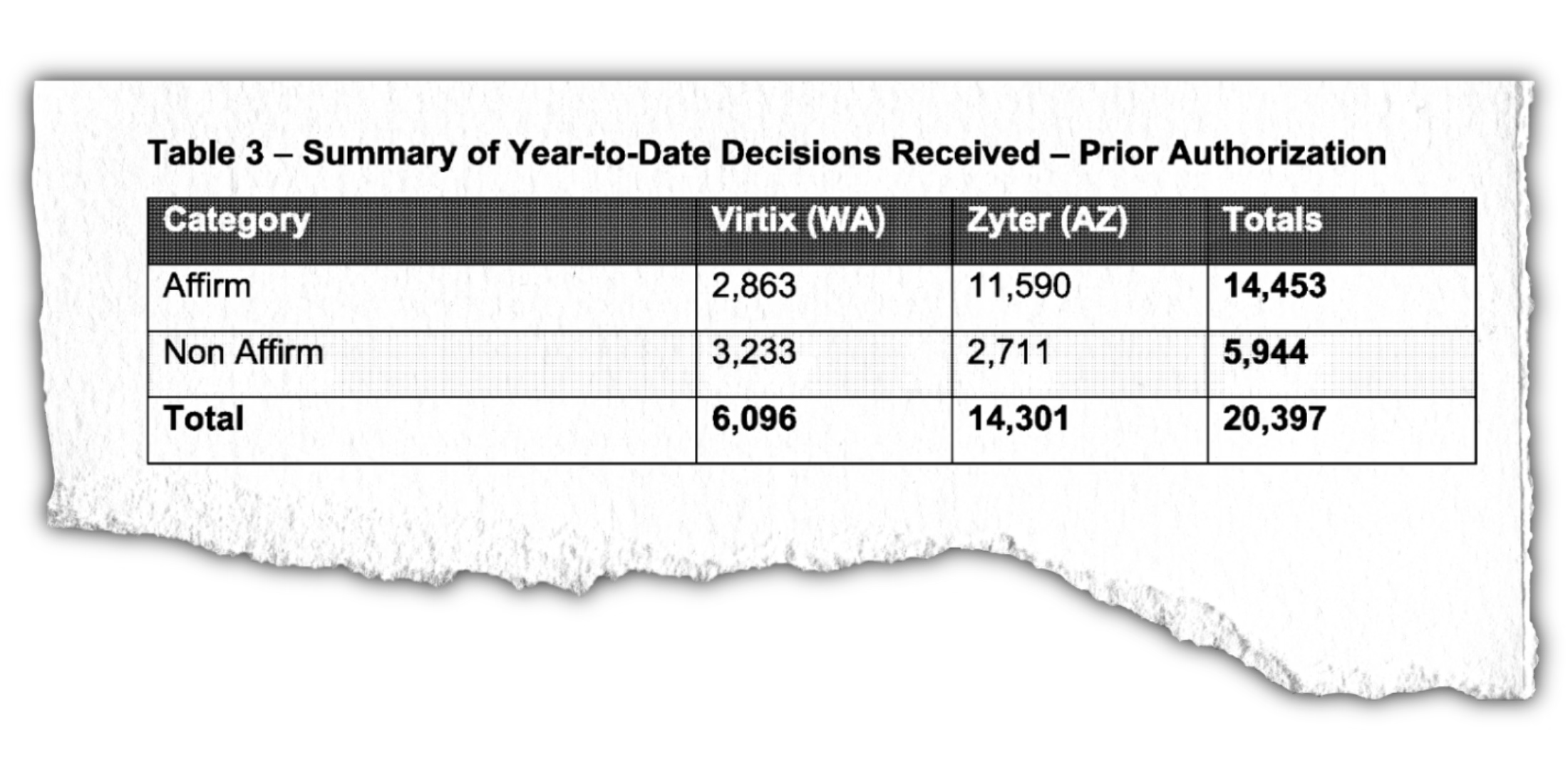
CMS released three months of weekly reports from Noridian, the MAC which covers Arizona and Washington, and they paint a bleak picture. As of March 30, Virtix, the WISeR contractor for Washington, had made 6,096 prior authorization decisions, but only 2,863, less than 50%, were affirmed or approved. Survey feedback from providers around the same time period found 44 out of 80 respondents were “extremely dissatisfied.”
Provider comments included:
“I have 8 elderly patients waiting for an approval [...] I have called and left messages and also sent emails. PLEASE HELP!”
“Zyter took over a month and a half to get their site up and running. In that time a patient had missed the time frame for an authorization for a Kyphoplasty, which was in turned denied.”
“We have patients calling our offices crying in pain because their procedures are being delayed while awaiting approvals or guidance tied to this model. A 3–4 day delay for necessary pain procedures is already difficult for vulnerable patients, but when providers cannot obtain answers for weeks, the situation becomes unacceptable.”
“I HAVE HAD TO WATCH 3 PATIENTS CRY AT BEDSIDE FOR NOT HEARING BACK ON THEIR PRIOR AUTH FOR KYPHOPLASTY/VERTABRAL AUGMENTIATION PROCEDURE. THESE PATIENTS ARE IN DEEP PAIN.”
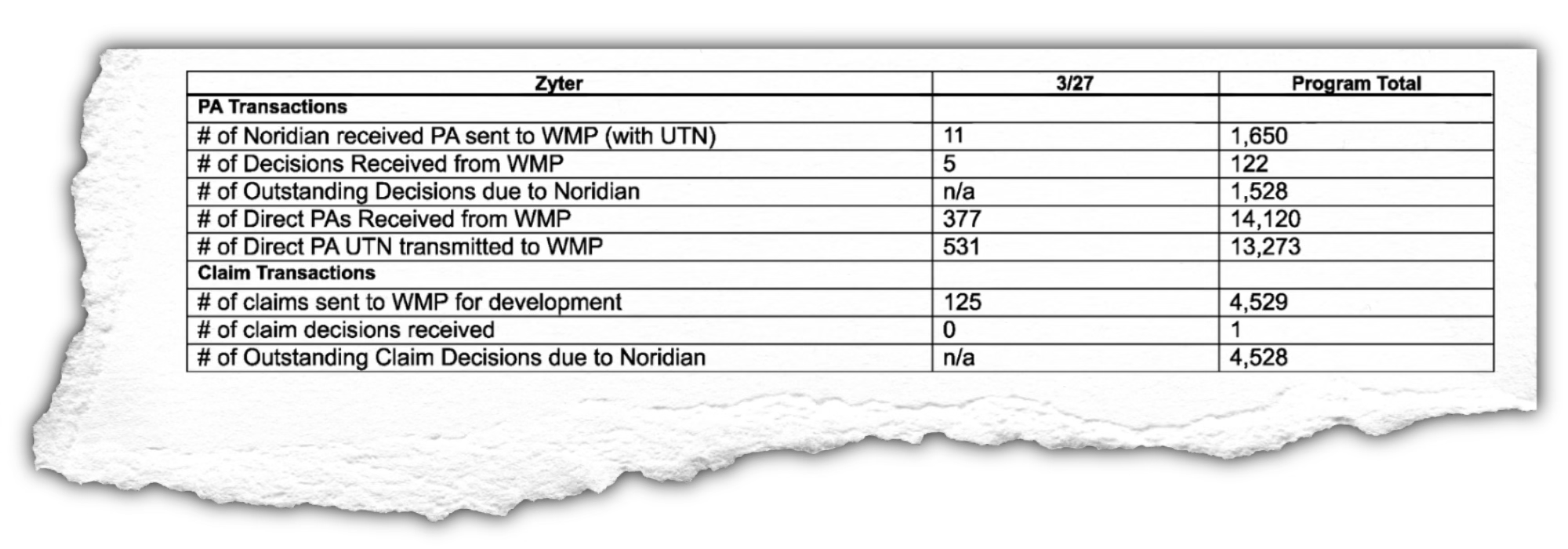
And the program rollout was also a disaster for providers, who were frequently faced with the choice of waiting for a broken portal before treating a patient, potentially hurting the patient or leaving them in pain, or rolling the dice with a “pre-payment review,” that may mean the provider never receives any payment after the service is completed. While this does technically make the WISeR model “optional,” pre-payment reviews for providers that “opt out” of submitting a prior authorization go to Medicare Administrative Contractors (MACs), who then send them back to the state’s WISeR vendor - putting these providers right back into the broken system. As of March 26, Noridian (the Medicare Administrative Contractor overseeing two WISeR states) had sent the Arizona vendor Zyter 4,373 claims for pre-payment review and only received one decision back.
With mounting evidence that this program has allowed new corporate actors to restrict care, this time using an unaccountable algorithm, CMS’ expansion plans are even more chilling. We’ve seen how prior authorization impacts services like oncology before - in a 2023 survey of cancer patients, 69% reported that prior authorization “resulted in a delay in care,” and dozens of hospital systems have stopped accepting Medicare Advantage plans, shutting cancer patients out of seeing their own doctors and going to the cancer center of their choice.
Washington Wants AI Regulation. It Should Start With Health Insurers.

As lawmakers develop a national artificial intelligence framework, health insurers are already using automated decision-making tools to influence Americans’ access to care.
However, even before the pilot started, CMS was disregarding these types of issues. In the ICIP, CMS used prior authorization in Medicare Advantage as an argument to expand the practice in Traditional Medicare. The organization also argued that if the costs decrease under the WISeR model, CMS believed that “this historical precedent and evidence would directly factor into a certification analysis and would strengthen the case for certification, regardless of evaluation results.” This is a built in bias, because costs will naturally go down as prior authorizations are denied and patients choose to forgo needed care rather than navigate the complex pathway of appeals.
On June 23, 2025, HHS Secretary Robert F. Kennedy Jr. wrote that “pitting patients and their doctors against massive companies was not good for anyone,” and CMS Administrator Mehmet Oz promised “accountability” from the companies using prior authorization to rake in enormous profits in Medicare Advantage. But the WISeR model, created by CMS that same day, does the opposite: bringing in untested artificial intelligence vendors, allowing them to keep a 25% share of every denial, and secretly planning to force cancer patients, cardiology patients, and people requiring emergency services into the same system. This dynamic captures the WISeR model in a nutshell: rather than following through on fixes and improvements to Medicare Advantage, Kennedy’s CMS is just worsening and selling off Traditional Medicare instead.
Zena Wolf is a researcher with the Center for Health & Democracy. She previously worked for Rep. Alexandria Ocasio-Cortez and Sen. Elizabeth Warren conducting Congressional oversight.
Prior authorization is practicing medicine without a license, whether done by a human or by a computer.
Thank you, wicked wiser of Oz we see how you are bought and sold by the for-profit private and commercial health insurance industry. AI is now their tool for corporate welfare on steroids.