

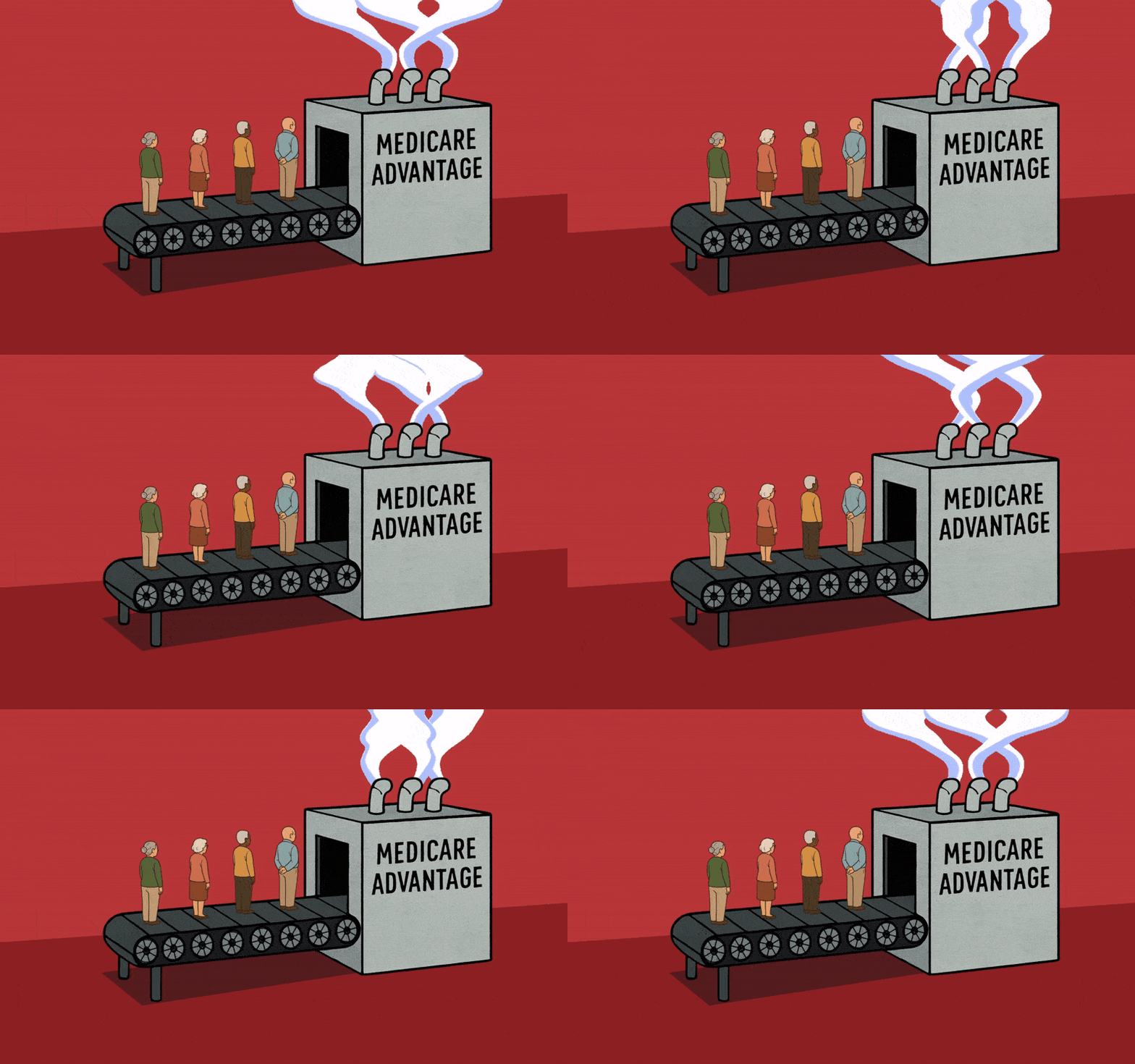
The Medicare Rights Center, a consumer organization in New York City, has published a report that could serve as a warning about Medicare Advantage plans to those new to Medicare and others who may be thinking of ditching their current Medicare arrangements.
“Medicare Advantage Proliferation: Too Much of a Complicated Thing” lays out the pitfalls of choosing an MA plan. The problems can surface soon after you enroll, or later down the road when you get sick and find you MA plan won’t pay for some or all of your care, leaving you with seemingly endless disputes over bills. It’s yet another warning about MA plans, this time from a group that has spent decades helping seniors choose their supplemental coverage to fill the gaps in Medicare that have been part of the program since its beginning.
As open Medicare enrollment begins Oct. 15, so does the annual bombardment of TV commercials featuring well-known celebrities to reel in new customers. Insurers can offer so many plans because there are no longer rules to prevent them from doing so. The Medicare Rights Center points out that in 2019 Medicare ended “the meaningful difference requirement,” arguing the change would promote “competition, innovation, available benefit offerings” that would provide beneficiaries with affordable plans “tailored for beneficiaries’ health care needs and financial situation.” It is debatable whether that has happened. As the center points out, the change has allowed MA plans to differ only in supplemental benefits or “in slight cost-sharing differences for certain services.”
With more organizations like the Medicare Rights Center pointing out the pitfalls in Medicare Advantage, and press stories like the excellent ‘‘10 Big Medicare Changes in 2026: Higher Premiums, Drug Price Drops and Looming Program Cuts,’’ published in the trade publication Investopedia at the end of August, a more realistic picture of Medicare Advantage plans will hopefully reach more beneficiaries.
Despite the warnings, Tricia Neuman, senior vice president and Medicare expert with KFF and a long-time observer of the Medicare program, says, “The bloom is not off Medicare Advantage plans.”
“People want extra things. The extra benefits” – such as fitness programs and some vision and dental services – “are a big draw,” Neuman said. “Medicare Advantage is simpler for people,” she added, because a drug benefit comes with the plans. If people choose traditional Medicare, they must buy a separate supplement policy and a separate drug benefit. Advantage plans also have an out-of-pocket limit on expenses.
“Lower income people say traditional Medicare plus a supplement policy is a luxury they could no longer afford,” said Neuman. “If premiums for Part D drugs continue to rise, people with limited incomes could shift to Medicare Advantage plans because they don’t have a separate premium for prescription drugs.” Whether that further erodes the Medicare population in the traditional program remains to be seen.
Neuman noted that many people who trade traditional Medicare for MA plans may have been enticed by the name: “It must be better because they call it Medicare Advantage. Why would they call it that if it wasn’t better.”
Perhaps it’s time to update the traditional Medicare program, which millions of seniors still prefer. It’s important to remember that for years policies sold as supplements to traditional Medicare (often called Medigap policies) were also plagued with misleading and deceptive, even fraudulent, sales practices. It wasn’t until the 90s when Congress finally put an end to those questionable sales tactics. Perhaps it is also time for Congress to put an end to some of the tricky sales practices that plague contemporary Medicare Advantage plan consumers.
Trudy Lieberman, a past president of the Association of Health Care Journalists, has had a long career in journalism, specializing in health care in recent years. She has written for many publications including Consumer Reports, Columbia Journalism Review, The Nation, Harper's Magazine, and the Center for Health Journalism. She has won many awards for her work including two National Magazine Awards, several National Press Club Awards, and a James Beard Award.
Thank you for this reporting. What we need is more publicity about how to sign up for original Medicare. At this point, I think it is hard to know that original Medicare is still an option. It is important to sign up for both Part B and Medigap (supplemental) at that first enrollment time -- age 65 or when no longer covered by employer-based insurance. After that first enrollment, if one wants to switch to original medicare, the Medigap (supplemental) is no longer open enrollment -- that is, the insurance company can and DO charge higher premiums for preexisting conditions. NO ONE IS TELLING THE PUBLIC THIS STORY. So all new enrollees don't know that there is an option other than Medicare Advantage.
These Medicare advantage plans are the equivalent of snake oil. Sure they pay some of your costs. Mostly the outpatient stuff to a point. Worked 14 years for the big guy and recently could not take it anymore. Was in the position to retire but as an employee you just feel dirty and complicit in all they do. Worked in UR dept. Poor providers- spending a lot of time documenting the how, the why, the reason for your care and at the end of the day you knew even with your 100 pages of documentation it was never going to be approved. What most don’t get to see is all the BS they feed the employees and all management does is back up the rhetoric, not because they care but because they get really big bonuses out of this so most in management turn a blind eye and fully back whatever leadership tells them, never questioning any processes that are clearly wrong. Medicare advantage needs to be abolished. Healthcare should be covered for free. There in lies the saving, because more people could manage their health before they develope all these chronic diseases.